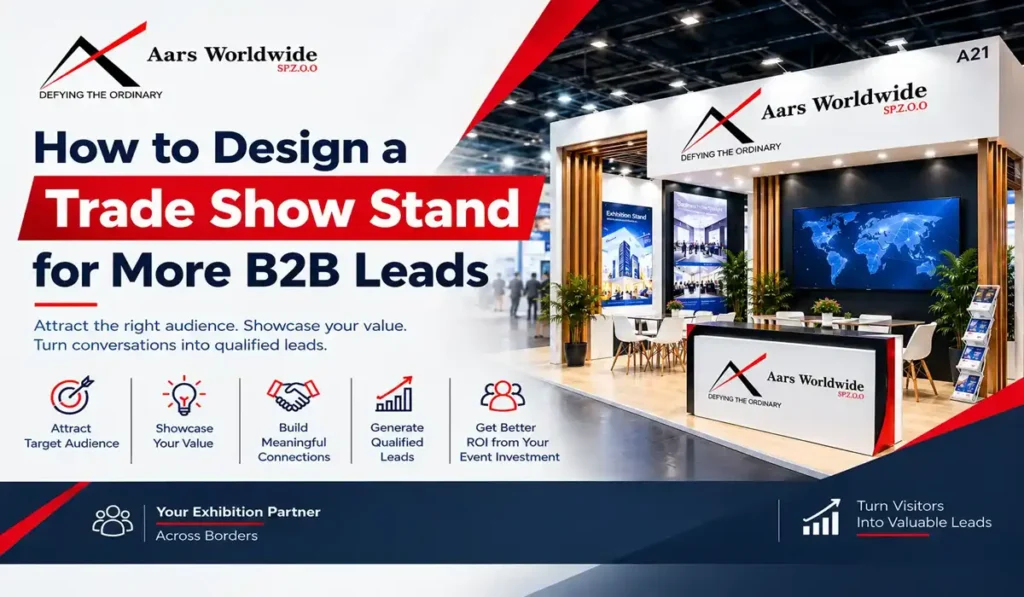
A trade show stand that looks good but generates no leads is a wasted budget. For B2B exhibitors, every design decision should support one goal: turning visitors into real conversations. This guide covers how to design a trade show stand for more B2B leads, from layout to staffing to follow-up.
Why Stand Design Directly Affects B2B Trade Show Leads
Most exhibition stand design focuses on how a stand looks from a distance. That matters, but B2B trade show leads are not won by graphics alone.
Trade show lead generation depends more on what happens once someone actually stops at your booth. A cluttered layout with no clear meeting space makes it hard for your team to capture and qualify interest.
What Makes an Effective B2B Exhibition Stand Design?
An effective B2B exhibition stand design starts with the visitor’s first few seconds. Branding should communicate what you do quickly, without forcing anyone to guess.
Beyond that, the stand needs a clear entry point, open space for quick conversations, and a separate area for longer discussions. A simple way to capture visitor details also matters, without slowing the interaction down.
How to Plan Exhibition Stand Design for Lead Generation
Decide where quick introductions happen, where deeper conversations take place, and how your team will move between them. This planning stage shapes everything that follows.
Why Staff Experience Shapes Trade Show Lead Generation
A stand also needs to work for the people staffing it. If your team can’t move easily, can’t see visitors approaching, or has nowhere private for a real conversation, leads get lost in the noise.
Storage, seating, and sightlines matter as much as graphics, even though they rarely get the same attention during design discussions.
Does Booth Size Actually Matter for Trade Show Booth Design?
Booth size is not the deciding factor. A well-planned smaller stand often outperforms a larger one with poor layout.
Trade show booth design should match your actual goals, whether that’s live product demos, scheduled meetings, or high-volume networking. Filling the square metres allocated to you isn’t the objective.
How to Turn Stand Visitors Into Qualified B2B Trade Show Leads
Design supports lead generation, but it isn’t the whole picture. Knowing who you want to attract before the event matters just as much as the stand itself.
Briefing your team on what a qualified conversation looks like, and having a clear follow-up process afterward, is what actually turns visitors into B2B trade show leads worth pursuing. A great stand with no follow-up plan still leaves value on the table.
Aars Worldwide Is Your Partner for Trade Show Lead Generation
With 20 years of experience across European trade shows, Aars Worldwide designs exhibition stands around how B2B visitors actually behave on a show floor, not just how a stand photographs.
From concept through fabrication and on-site installation, the goal stays the same: a stand built to support real conversations and generate leads your sales team can actually work with.
Get Your Stand Ready to Generate More B2B Leads
A trade show stand is only as good as the leads it produces. If you’re planning your next exhibition and want a stand designed around trade show lead generation from the ground up, get in touch with Aars Worldwide to start the conversation.
Frequently Asked Questions (FAQs)